Next.js 15 + Notion as CMS: Ditch the Git Deploy for Content Updates
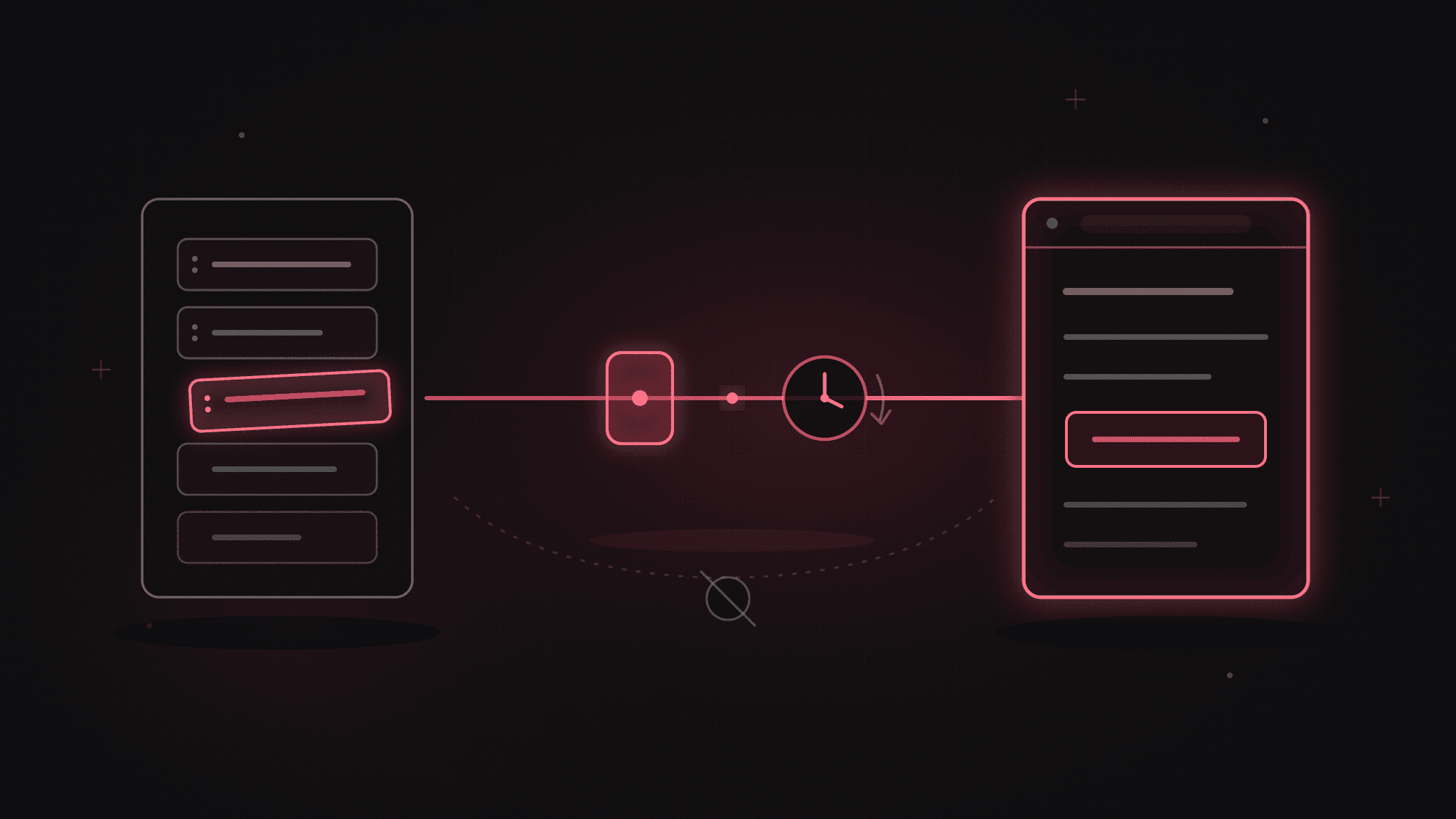
Shipping a content typo should not require a code release.
Yet many teams still run editorial updates through PR, review, merge, deploy, and cache warm-up just to change copy. That process is defensible for behavior changes, but expensive for content operations.
If you already run planning and editorial workflow in Notion, a Next.js + Notion CMS architecture can separate content velocity from deployment velocity without lowering quality.
This guide covers where this model works, where it breaks, and how to implement it with production guardrails.
The real problem this architecture solves
Most CMS discussions focus on tooling preference. The real issue is operational coupling:
- content edits are coupled to code deploys,
- editorial throughput is gated by engineering bandwidth,
- state and ownership are split across disconnected systems.
The goal is not "use Notion because it is easy." The goal is to move mutable content into a governed workflow boundary while keeping product behavior in code.
What lives in code vs what lives in Notion
A clean split keeps systems reliable.
Keep in code:
- rendering logic,
- route behavior,
- feature flags,
- schema normalization and validation,
- cache invalidation strategy.
Keep in Notion:
- article records,
- editorial status transitions,
- metadata fields,
- approval signals,
- asset associations (cover winner, etc.).
That boundary prevents accidental policy drift.
When this pattern is the right choice
This model is a strong fit when:
- your team already operates in Notion day to day,
- non-engineers need frequent publishing capability,
- your site is content-heavy and update cadence is high,
- you can enforce strict publish gates in the data model.
It is a weaker fit when:
- you need highly custom editorial permissions/workflows beyond Notion capabilities,
- your content model is deeply relational and complex,
- compliance requirements demand specialized CMS audit features.
Reference architecture for Next.js 15
A practical layout:
- Notion is the source of truth for editorial content.
- Next.js reads from a normalized data-access layer (
lib/content/notion.ts). - Public routes only consume publish-safe records.
- Status changes trigger revalidation (
revalidatePath/revalidateTag). - Publish checklist and media requirements block unsafe transitions.
This gives you a deterministic publish contract instead of ad-hoc manual checks.
Non-negotiable guardrails
Use these as hard gates, not optional guidance.
- Published-only query policy
Public pages must only fetch records in approved publish states.
- Required metadata gate
Do not publish without slug, title, meta description, canonical URL strategy, and cover URL.
- Single winner cover policy
Exactly one cover image job should be marked winner for each article.
- Explicit lifecycle states
Use clear states (Draft, In Review, Ready to Publish, Published) and enforce transitions.
- Deterministic cache invalidation
Publishing should always trigger targeted revalidation, not best-effort refresh behavior.
Query policy example (draft leakage prevention)
const filter = {
  and: [
    { property: "Content Status", select: { equals: "Published" } },
    { property: "Has Required Metadata", checkbox: { equals: true } },
    { property: "Has Winning Cover", checkbox: { equals: true } },
  ],
};
Policy in the data query is safer than relying on UI conventions.
Implementation pattern that stays maintainable
Use a single data-access module and normalize once.
// lib/content/notion.ts
export async function getPublishedArticles() {
  const rows = await notionQueryPublished();
  return rows.map(normalizeArticle).filter(isRenderableArticle);
}
Then keep route handlers/pages thin:
- fetch normalized content,
- render,
- handle empty/not-found states safely.
Avoid scattering raw Notion property access across multiple components.
Caching and invalidation in Next.js 15
If your publish operation doesn’t revalidate the right cache scope, you will ship stale content.
Minimum practical strategy:
- tag list + detail fetches (for precise revalidation),
- revalidate both index and detail paths on publish,
- include safe fallback behavior when revalidation fails.
Treat invalidation as part of publish correctness, not an optimization.
Failure modes teams hit first
- Draft leakage: missing filter constraints in query path.
- Schema drift: frontend assumptions diverge from Notion fields.
- Stale reads: publish happened but cache did not invalidate.
- Gate bypass: direct manual field edits skip required checks.
- Asset ambiguity: multiple cover candidates, no deterministic winner.
Most of these are process failures. The fix is stricter contracts, not more heroics.
Governance model that actually scales
Your editorial lifecycle should map to explicit ownership and checks:
Draft: writing and structural completeness.In Review: logic, copyedit, and formatting gates.Ready to Publish: metadata and media gates all green.Published: visible to public queries and indexed routes.
Tie automation to transitions, not to manual reminders.
Why this outperforms Git-only content for many teams
Git-first docs remain excellent for engineering-heavy documentation.
But for editorial velocity, this model often wins because it:
- reduces deploy overhead for content-only updates,
- gives clear operational visibility in one system,
- keeps technical safeguards in place through enforceable gates.
In short: faster publishing with fewer accidental regressions.
Quick fit check
This architecture is likely a strong fit if the answer is "yes" to most of these:
- Do we need content updates independent of deploy cadence?
- Is Notion already our operational home for content?
- Can we enforce required metadata + winner-cover gates?
- Can we implement deterministic revalidation behavior?
- Do we want one linked workflow from calendar to publish?
Closing
Next.js 15 + Notion CMS is not about replacing engineering discipline with convenience. It is about moving the right responsibilities to the right boundary.
When you combine strict query policy, explicit state transitions, metadata/media gates, and deterministic cache invalidation, you get a workflow that is both fast and production-safe.
That is the standard worth implementing.
